

Advertisement
Planners emphasize downtown revitalization, housing affordability, urban design improvements, and better access to parks and transportation
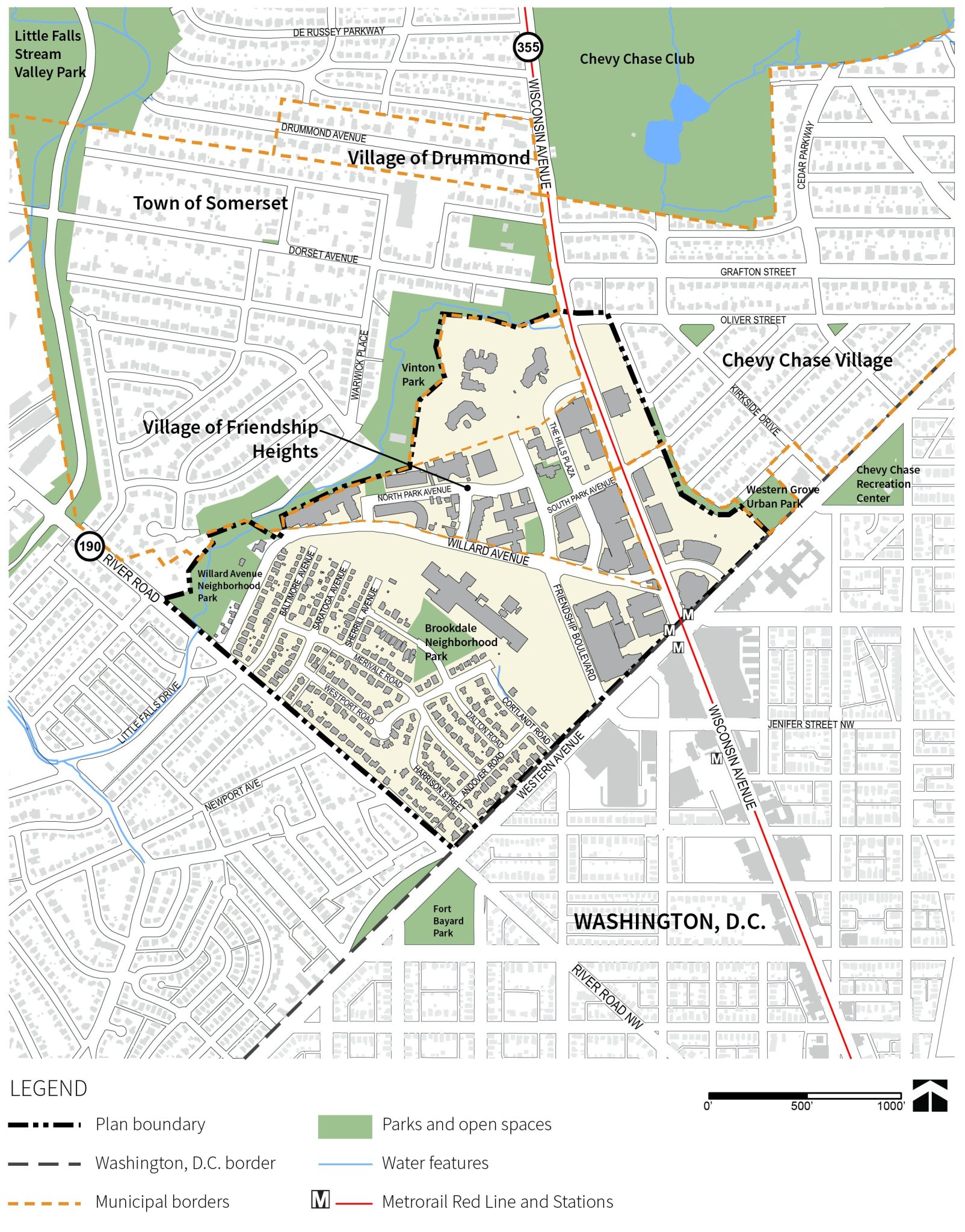
Wheaton, Md. – The Montgomery County Planning Department, part of The Maryland-National Capital Park and Planning Commission (M-NCPPC), presented the preliminary recommendations of the Friendship Heights Sector Plan today to the Montgomery County Planning Board, also part of The M-NCPPC. Last week, the plan team also presented the preliminary recommendations to community members at two events, reaching over 150 people. The sector plan encompasses downtown Friendship Heights, the commercial development along Wisconsin Avenue and over to River Road, including the GEICO headquarters property, and properties in the Village of Friendship Heights and Chevy Chase Village. View the plan boundary.
Watch today’s Planning Board presentation; read the preliminary recommendations staff report.
Montgomery Planning staff received questions and feedback on the preliminary recommendations from the Planning Board and the community. Staff will continue developing the Working Draft, or the first draft of the sector plan, and then share it with the community and the Planning Board this summer to receive additional feedback.
“These initial recommendations lay the groundwork for a more vibrant and connected Friendship Heights with thoughtful redevelopment, more diverse and affordable housing, and public spaces that bring people together,” said project lead Atara Margolies. “We will continue shaping these ideas with community members and stakeholders to ensure the plan reflects shared priorities and aspirations.”

Advertisement
Key preliminary recommendations
Land Use and Zoning
- Establish a building-height framework that concentrates the tallest buildings at Wisconsin and Western avenues with appropriate transitions to residential neighborhoods.
- Encourage redevelopment of sites in the plan area that have development potential, including several large parcels along Wisconsin Avenue and the GEICO headquarters property.
- Incentivize new development projects to provide much-needed neighborhood amenities.
Housing
- Expand and diversify housing options, including more affordable housing, by increasing overall housing supply, encouraging a mix of unit types and sizes near transit, and ensuring homes are available for renters, families, seniors, and people with disabilities across all life stages and income levels.
Urban Design
- Create a walkable, connected, and people-focused urban environment by placing buildings close to the street, activating ground floors and public spaces, improving streetscapes, enhancing wayfinding, and expanding pedestrian and bike connections throughout the plan area.
Transportation
- Explore extending the MD 355 Flash bus rapid transit (BRT) South route to Friendship Heights and dedicating one travel lane in each direction.
- Improve pedestrian and bicycle connectivity and safety throughout the plan area, with a focus on Wisconsin Avenue and River Road.
Parks and Public Spaces
- Improve existing parks by enhancing access and activating spaces to be more welcoming, and create new connections from existing public parks, such as Brookdale Neighborhood Park, to the downtown.
- Create new parks and public spaces that will provide opportunities for active recreation, social connectivity, and respite.
The preliminary recommendations also address community amenities, environmental protection and enhancement, and historic preservation.
Community Engagement
In developing the preliminary recommendations, the Friendship Heights Sector Plan team carried out a wide range of in-person and online community engagement activities. Through in-person workshops, virtual meetings, online questionnaires, and dozens of meetings with community groups, property owners, business owners, residents, and other stakeholders, the team reached over 1,500 community members since fall 2024. The sector plan’s website includes recordings of community workshops and events as well as the plan’s Engagement Report.
Key Takeaways
Advertisement
Community members expressed support for welcoming additional people to Friendship Heights, emphasizing that more residents could help sustain and grow the existing retail corridor, although many expressed concerns about increased building density and traffic. Other takeaways included:
- Highlighting the need for diverse, attainable and affordable housing options for seniors, young families, and first-time homeowners.
- Ensuring pedestrian safety with calls for safer sidewalks, protected bike lanes, improved intersections, and better lighting.
- New and improved green spaces as part of future development, and emphasized the importance of preserving the existing parks, trees, and open spaces.
- New community amenities emerged as a key priority for stakeholders, with a movie theater, library, and arts center among the preferred choices.
Staff will continue to collect community feedback on the preliminary recommendations over the coming months.
Overview of the Friendship Heights Sector Plan
The Friendship Heights Sector Plan represents a major step forward in shaping the future of one of Montgomery County’s most dynamic urban communities. Building on the foundation of the 1998 Friendship Heights CBD (Central Business District) Sector Plan and informed by the insights of the 2024 Friendship Heights Urban Design Study, this updated sector plan reflects a deep exploration and understanding of the community’s evolving needs. The Urban Design Study, developed through extensive public engagement and a detailed analysis of the existing public realm, highlighted both the strengths that define Friendship Heights and the challenges that must be addressed to ensure its long-term vitality.
Guided by this groundwork, the sector plan will create a forward-looking vision for the next 20 to 30 years, focused on creating a more connected, livable, and sustainable Friendship Heights through strategies that address land use, transit-oriented housing opportunities, parks and public space, transportation improvements, climate mitigation, and the protection and preservation of natural and historic resources. Together, these elements intend to form a comprehensive roadmap for a thriving urban environment that supports residents, workers, and visitors alike.
At the heart of the plan are four key goals. First, it seeks to strengthen existing connections and introduce safer, more accessible ways for people to walk, bike, or ride between Friendship Heights and nearby neighborhoods. Second, it envisions a richer network of parks and public spaces that offer opportunities for social connection, recreation, and quiet respite. Third, it aims to reinforce the Wisconsin Avenue corridor as a vibrant center of activity and economic growth. Finally, the plan prioritizes resilience—advancing strategies that help the community adapt to and mitigate the impacts of climate change.
Community members are encouraged to stay engaged throughout the planning process. Sign up for Montgomery Planning’s Friendship Heights e-letter for updates, key milestones, and opportunities to participate as the vision for Friendship Heights continues to take shape.
Read the original article at montgomeryplanning
